Rethinking Public Defense: How The Bronx Defenders Built a Civil Defense Practice to Address the Full Scope of Legal System Involvement
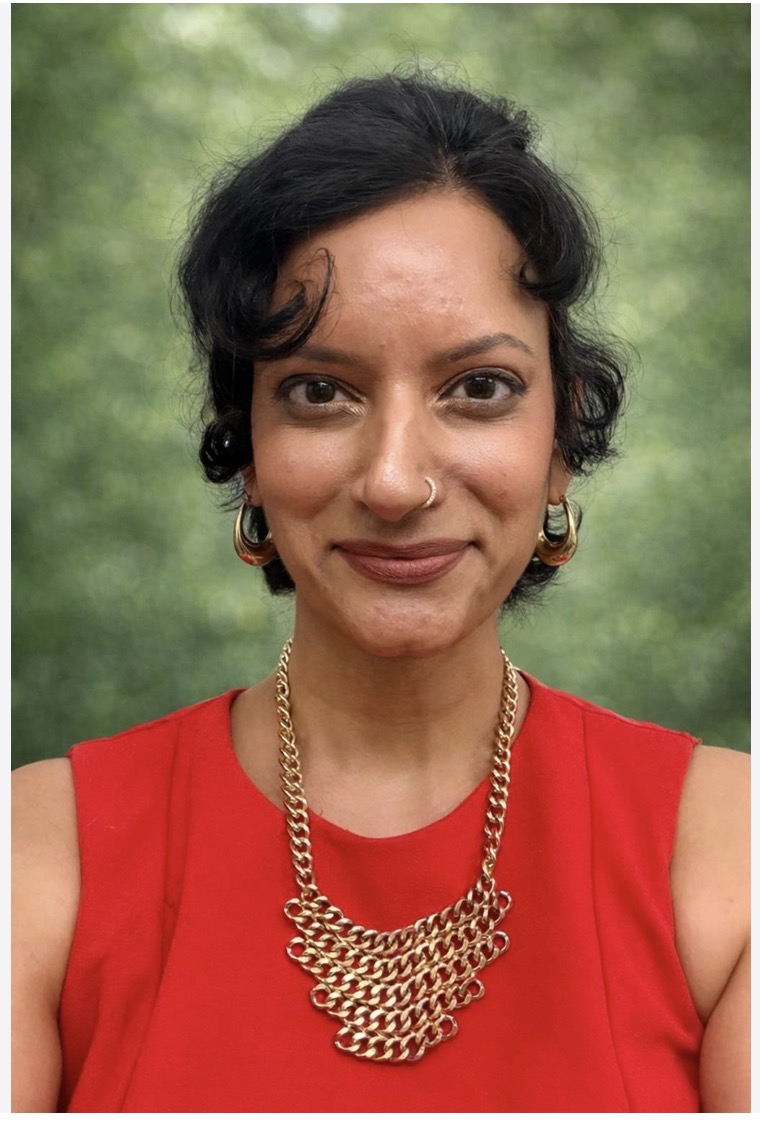
A Conversation With
Runa Rajagopal, the Managing Director of the Civil Action Practice at The Bronx Defenders, has spent 15 years building a collaborative practice designed to confront these interconnected challenges and to disrupt these far-reaching civil consequences, while advocating for rights, protections, and meaningful changes to the legal system to prevent them in the first place.
Introduction
The Bronx continues to face some of New York City’s most profound economic hardship and inequality and has long faced deeply concentrated poverty, reflected in the highest rates of eviction, housing instability, unemployment, and food insecurity of any borough. As a result, for many in the Bronx, a single interaction with the legal system can trigger cascading consequences beyond their case that can jeopardize the very things that make stability possible: a home, a job, a steady income, and ultimately a person’s ability to live, work, and thrive.
When these consequences go far beyond the confines of a case, how should public defenders respond? What systems or interventions can the profession build to prevent a legal problem from escalating into multiple life-altering crises? And what role should the government play to ensure that people do not lose their homes, jobs, family or basic rights before they’ve ever stepped into a courtroom or simply because they stand accused but lack access to counsel?
In this interview, Runa discusses CAP’s mission and multidisciplinary approach, explaining how its three teams collaborate to support people before a crisis escalates. She speaks to what civil public defense looks like on the ground, how the affordability crisis in the Bronx shapes CAP’s work, and what recent developments – like the new City budget and the historic rent freeze – mean for the communities that the practice serves.
Q: The Bronx Defenders’ Civil Action Practice has been at the forefront of civil public defense for over 25 years. For those who may be unfamiliar, can you explain what the Civil Action Practice is and what it does?
A: When most people think of public defense, they think of defense attorneys in criminal court. We start from a different premise: you cannot meaningfully defend someone if you don’t address what happens to them outside the courtroom. A single encounter with the legal system can trigger a whole separate yet related set of civil consequences at the same time; it can lead to losing your housing, your job, your benefits, your property. Those consequences can be more devastating and longer lasting than anything that happens in the original case itself.
The Civil Action Practice was built on a simple yet transformative idea: to combat those consequences and to provide meaningful civil solutions such that our clients emerge in a stronger position than when we first met them. We defend tenants from eviction, push back against employers who discriminate against people with records, fight to get property back that has been seized by the government, help people access the benefits and income they are entitled to, and show up in every way we can so that no one faces these systems alone. We are civil public defenders.
Q: You mentioned the term “civil public defender.” How do you define a civil public defender, and why does that definition matter?
A: The public defender mentality is about standing shoulder to shoulder with someone and partnering with them to navigate what’s happening in their life. No matter what the accusation is, it’s about ensuring that everyone receives quality, zealous, and relentless representation. As civil public defenders, we bring that same mentality into civil legal spaces where historically it has not existed, spaces where, unlike in Criminal Court, for example, there is no right to a lawyer, and there are less constitutional rights and protections but where the stakes for the people we represent are just as high. To me, that means seeing the whole person, not just the case in front of us. Our clients are people, not just cases, and our work is to radically transform how people are represented in the legal system and create lasting change for the communities we serve.
Q: And in practice, what does that defense actually look like for the people you work with?
A: What we see is that when someone enters any legal system, a whole cascade of civil problems follow. A person might come to us because of an arrest, but right away we see that their job is at risk. If you’re a teacher, a home health aide, or a security guard, being fingerprinted means that information goes to your licensing agency automatically, and suddenly your license, your job – or both – are in jeopardy. If you lose your job, you can’t pay rent. If you can’t pay rent and you have a family, your children’s stability is at risk, and you can end up displaced into the shelter system.
Someone may say, “I’m not convicted of any crime, but my car was seized, and I can’t get it back until the case is over. I need that car to get to work, to take my kids to school, and to get to my medical appointments. So now I’ve lost my job. Now I can’t afford my apartment.” Each system, criminal court, family court, housing court, operates in its own world and only concerns itself with its own case. We are the ones drawing the connections between all of it, because the people we represent are living all of it at once.
Q: What makes BxD’s approach to civil defense unique?
A: What’s most unique about what we do starts with the community we serve. The Bronx is not just a location for our model; the needs of the community helped shape the model itself. The majority of the people living and working in the Bronx are people of color and immigrant New Yorkers, while also including some of the most economically distressed neighborhoods in the country. It is a community that is vibrant, strong, and resilient, but one that has experienced generations of divestment and inequality. That has been consistent decade after decade throughout the history of the Bronx, and it begs the question of why that persists. Understanding that context shapes everything about how we’ve built this practice.
What it also means is that we reject a one-size fits-all approach; we center the needs and articulated goals of each client and respond to the actual problems experienced by our community. One person at a time.
Beyond the community we serve, we have built CAP to be comprehensive and integrated. Rather than focusing on one narrow slice of civil legal need or treating the civil problems as “collateral” or separate, we support our clients in the multitude of civil places and spaces where they need defense. We are one of the largest, most comprehensive and very few civil practices embedded in a public defender’s office in the country, and that is intentional, reflected in how we have organized our three teams, each designed to reach people at a different point of intervention.
Q: How has our understanding of collateral consequences evolved, and what does that evolution tell us about the role of civil legal services in public defense?
A: I actually detest the term “collateral” consequence. It doesn’t give credence to the extent of devastation that our clients experience or how central the civil fallout is to a person’s life.
Padilla v. Kentucky was an important turning point. In 2010, the U.S. Supreme Court recognized that defense counsel has a Sixth Amendment obligation to advise clients about the collateral consequence of deportation arising from a guilty plea. But the principle behind Padilla reaches beyond immigration; competent representation requires understanding and advising clients about enmeshed, serious, and likely civil consequences.,
And in the years after, our understanding of civil consequences has expanded significantly. There are now more than 44,000 identified statutory consequences of a criminal conviction across the country; even that staggering number doesn’t capture the real-world impact that can flow from an arrest or other contact with the legal system. It is now well recognized that civil consequences can be among the most enduring effects of legal system involvement. Some expressly written into the law; others are unintended ripple effects. Either way, if we’re serious about defending people and communities in a meaningful way, civil legal advocacy cannot be collateral either. It has to be part of that defense.
Q: CAP has recently expanded into three teams with three unique client touchpoints. Can you walk us through each one and explain the thinking behind that structure?
A: Our Integrated Civil Defense Team is our flagship team and the most deeply embedded, where our attorneys, legal advocates, social workers, and benefits specialists work collaboratively across our criminal, family, and immigration defense practices, taking referrals from across the office so that when system involvement threatens a person’s housing, employment, property, income, or rights, civil attorneys and advocates are already in the room. The general civil legal services we provide are flexible and within each charge or accusation, we work with our counterparts to find civil solutions to legal problems.
Our Housing Justice and Defense Team represents tenants facing eviction, unsafe conditions, and subsidy loss directly in housing court. Created as a result of New York’s historic Right to Counsel law, passed in 2017, we’ve built a team of attorneys, social workers, benefits specialists and administrators who work to provide holistic and collaborative representation. Even with this right, nearly three quarters of people facing eviction in the Bronx still have no legal representation, and the Bronx has the highest number of eviction filings in the City. Our team shows up every day to close that gap, maintaining a consistent presence in housing court, so people aren’t left facing those proceedings alone.
And our newest team, the Community Defense Team, is the only one of its kind in New York City. With the passage of Right to Counsel in housing court, most organizations have turned their attention to maintaining a presence in court and representing clients once a case is filed, which is exactly what our Housing Justice and Defense Team does. But our Community Defense Team is about going back to the fundamentals of civil defense, reaching people before they ever get to court or when they haven’t been able to secure representation, despite being eligible. We offer in-person intake hours with no appointment necessary, with our housing attorney, benefits specialists, and reentry advocate on site to connect with people at the moment they need help. And beyond that, our housing organizer works with the team to ensure we’re out in the community, hosting trainings on tenant rights and housing conditions, pairing legal support with advocacy so that people not only know their rights but also know we’re there to help them exercise those rights.
All of our teams share the same core approach: intervening early, collaborating across roles and expertise, being human-centered, and disrupting silos so we can address the full range of civil issues our client face. At our best, our clients don’t just defend against their case, we amplify their voices, protect what matters most to them, strengthen their ability to advocate for themselves, and work toward outcomes that leave them in a more stable and empowered position than when they came to us.
Q: All of these civil consequences you describe are occurring in a borough facing a serious affordability crisis. How does that context shape what you’re seeing in your practice, both in court and on the ground?
A: What gets missed in the affordability conversation is how deep the crisis goes. Why is someone in rent-stabilized housing, partially working, with some public assistance, still unable to make rent? Why is someone in public housing, where rent is supposed to be capped at 30% of their income, alleged to owe $90,000 in arrears? Those are the questions we need to be asking. We talk a lot about building new affordable housing, and that matters, but we have to start by understanding why the programs that are supposed to make housing affordable are failing the people they were designed to serve.
Every single day, we see people that are already stretched to their limit before any legal system involvement, and each system they get pulled into comes with its own fines, fees, and costs. When you’re already financially strained, having to find alternate sources of funds just to get out of a system you were pushed into is often impossible.
Q: How have things been shifting under the new mayoral administration, and do you see that reflected in the new city budget?
A: It’s too early to know with certainty, but it does feel like there’s more allyship, and that matters. Having elected officials who are thinking concretely about how people are impacted and what solutions are available is meaningful, and that hasn’t always been the case. The new budget reflects that in real ways, from investment in legal services to CityFHEPS and other meaningful pieces around housing and economic access. It’s not 100% of what was hoped for, and the problems we’re facing are somewhat beyond what the budget provides. But it really means something that in a moment of fiscal deficit, programming didn’t get cut. That reflects what the priorities are, and that collaborative posture between the administration and advocates is itself promising.
Q: On that note, the Rent Guidelines Board recently voted to freeze rents for one year and two-year leases in rent-stabilized apartments, effective this October. What does that mean for the communities you work with?
A: It’s really important, and not just for the people we serve. Working people throughout the Bronx who live in rent-stabilized apartments will feel this. A 0% increase is meaningful breathing room for people who are already stretched thin, and while not everyone will see it immediately since it depends on when your lease renews, every bit helps.
I also want to credit the tenant movement-tenants and community organizers-for fighting hard to make this happen. There has never been a freeze on both one- and two-year leases before, and that reflects the power and organization of the tenant movement. That’s really who deserves the credit here.
Q: What does this work mean to you, and what do you want people to know?
A: Civil public defense is fundamental to the lives of the people we serve, and I’m not sure it always gets seen that way. We work on the things that are at the core of everyone’s daily life: jobs, homes, income, basic rights. And because those things are so woven into everyday life, the work can feel less visible than it actually is.
For the communities we fight for every day, these are not abstract legal issues. They are the difference between stability and losing everything. The civil legal problems our clients face around housing and economic justice are expansive, and sometimes they feel insurmountable. But that is exactly why this work matters, and why having a civil practice that is embedded, integrated, and present at every point of intervention is so important. There is enormous opportunity right now to expand the rights available to people in civil legal matters, to strengthen those protections in meaningful ways, and to invest in communities in ways that create real and lasting change. To divest from carceral and punitive practices and to invest in healthy, safe and supported communities. That is what we are working toward, and that is what it means to be a civil public defender.